
Bra Fit Guide
Start with what feels off, then find a fit check to try.
ONE BRA · FIVE SIMPLE CHECKS
Your fitting room
Trying a bra on? Check how it feels, one step at a time. No measurements needed.
This check stays on this page only. Finishing, exiting, refreshing or leaving clears it. Your saved measurements stay as they are.
YOUR OBSERVATIONS · NOT A FIT SCORE
Add the label on this bra (optional)
What you noticed
Still uncomfortable? Trust how it feels. Stop wearing a painful bra and check the brand's fitting guidance or ask a fitter.
Five checks you can use any time
- Settle the bra. Settle the cups and ease straps that pull hard. On a new bra with hooks, try the loosest hook. Relax your arms. Stop if uncomfortable.
- Check the band. Look from the side. Notice both its position and how it feels; a level band can still feel restrictive.
- Check the cups. With arms relaxed, check both sides. Select every observation that applies. A gap at the rim and extra room throughout are different observations.
- Check the straps. After adjusting, the straps should stay in place without digging. Do not pull them tight to remove a cup gap.
- Sit and move. If comfortable, sit and gently raise and lower your arms. Notice any shifting or pressure. You do not need to complete a movement that hurts.
For wired bras, also check that the wires sit around the breast without digging or rubbing. For wire-free bras, skip the wire check. These are general observations for everyday bras; sports, nursing and post-surgery bras need guidance for that style.
Check both sides. A top-edge gap alone does not show that the whole cup is too large. Multiple issues or uncertain observations need another look before a size comparison.
Fit references: Bravissimo: fit checks · Bravissimo: hooks and fit questions · Wacoal: when to change cup or band
A NEXT STEP FOR THE BRA YOU HAVE
Fix a fit problem
Gaps, spilling, a tight band, or a band that rides up? Start with what you notice and find one thing to check or compare next.
No tape measure or account needed. Answers stay on this page and are cleared when you leave or refresh. Nothing is saved.
YOUR NEXT STEP
Your observations
Why this comparison or check?
What to look for
A comparison to try, not a fit guarantee. You can stop whenever you feel uncomfortable.
Illustrated checks and other fit questions
Where do you see a gap?
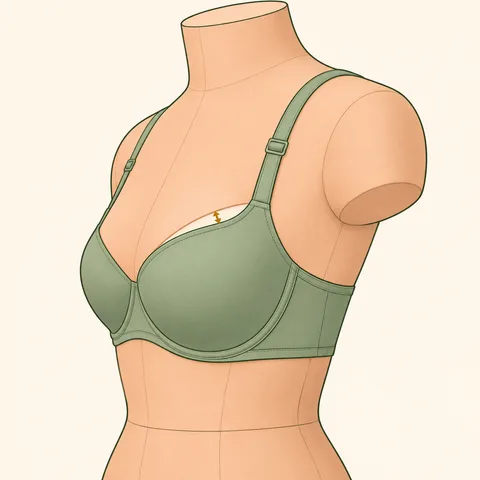
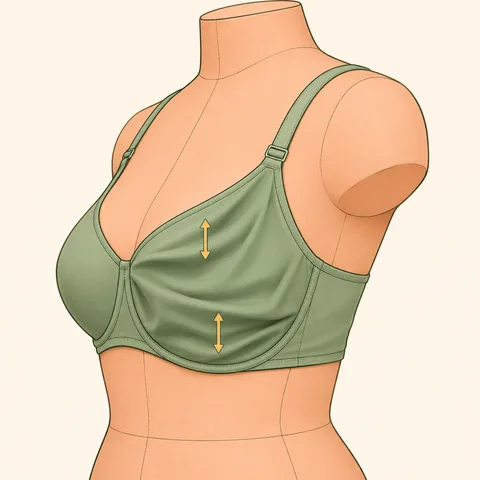
Illustrations emphasize the difference. Check how your own bra feels; folds alone do not determine fit.
A space at the upper edge and a cup that feels roomy throughout are different observations. Check both sides and note any spilling elsewhere before deciding what to compare.
Adjust, then check again
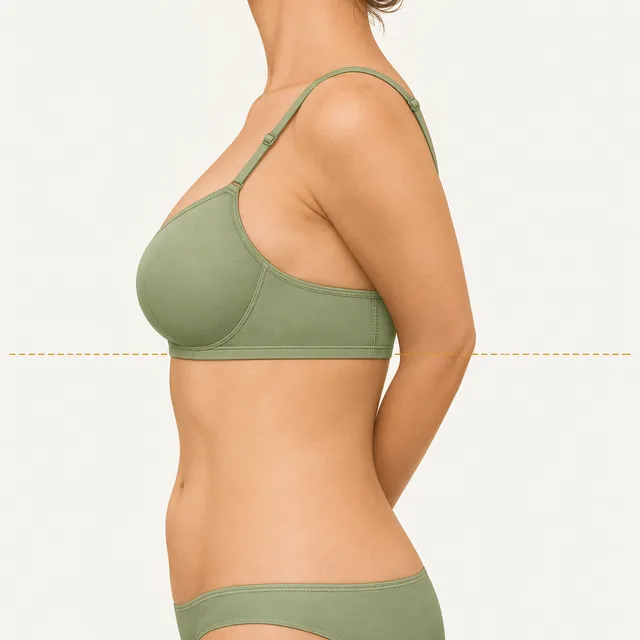
Settle the cups and adjust the straps without pulling hard. Try the loosest hook on a new bra with a hook closure. Look with your arms relaxed, then sit and move gently.
Change one thing at a time
Compare the same style with a different cup size, a sister size when the cups fit but the band needs changing, or the same size in a different cup shape. Recheck comfort after each comparison.
One side fits differently
Make sure the fuller side is comfortably contained before trying a more flexible cup edge for the side with a gap.
A bra that used to fit
Compare with a less-worn bra if you have one, then check again. If the change persists, consider taking fresh measurements.
Not sure what to try next?
You can use the observations without knowing your label. S/M/L and brand-specific labels need that brand’s chart. Straps should stay in place without digging; wires, if present, should sit around the breast without pressing into it. If you cannot tell what is wrong, use the brand’s guidance or ask a fitter.
Need a fresh starting size? Read the measuring guide.
Fitting references: Bravissimo: fit checks · Bravissimo: hooks and fit questions · Wacoal: when to change cup or band
Cups gape
What to check
Does the whole cup feel roomy, or is there a gap just at the top edge? Adjust the straps so they stay in place without digging, then check again with your arms relaxed.
What to try
If the cup feels roomy throughout and the band fits, compare one cup step down on the same band. If only the edge gaps, try a different cup shape or a flexible upper edge in the same size first.
Gap on one side? Fit the fuller side first. A stretch cup edge can accommodate the difference without making the fuller side spill.
Cups spill over
What to check
Settle the cups and check both sides with your arms relaxed. Note where tissue spills and check whether the band stays level.
What to try
If the cups still spill and the band is comfortable and level, compare one cup step up on the same band in the same style. Recheck containment and comfort after moving.
If you also see gaps, the band rides up, or the wires dig in, check those observations before choosing a size change.
Band feels tight
What to check
Try the loosest hook on a new bra with a hook closure. Check whether the band presses all around, or the pressure is concentrated where the cups spill or the wire digs.
What to try
If the cups fit and the band still feels restrictive, try one band step up and one cup step down. If the cups spill and the band otherwise sits level, compare a larger cup on the same band first.
Cups fit but the band feels too tight? Find your looser sister size.
Band rides up
What to check
Look at the band from the side with your arms down. It should sit roughly level front to back. If the straps are pulling hard, loosen them a little, then raise and lower your arms to see if the band still shifts.
What to try
If the cups fit and the back keeps creeping up, try one band step down and one cup step up. If an older bra used to fit, compare a newer one before assuming your size changed.
Cups fit but the band keeps moving? Find your tighter sister size.
How should a bra fit?
- Band: Sits level and feels snug without digging or restricting you when you sit or move.
- Cups: Hold the breast tissue without spilling or leaving large empty areas.
- Straps: Stay in place without digging into your shoulders.
- Underwire, if present: Sits around the breast rather than on breast tissue. Wire-free bras do not need to pass an underwire check.
Compare one change at a time: the same style in a neighboring size, or the same size in a different cup shape. Recheck the fit after sitting down and moving your arms. If you need a fresh starting size, measure your band and bust first.
Fitting references: Bravissimo’s band, cup, wire and strap checksand Wacoal’s example of when to change cup size instead of sister sizing.
Method and references reviewed November 18, 2026. Read our methods and limits.